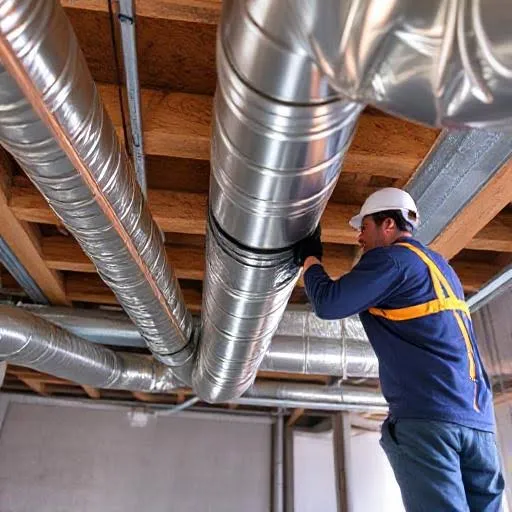
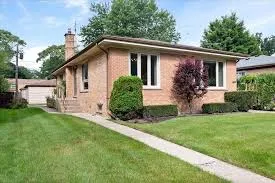
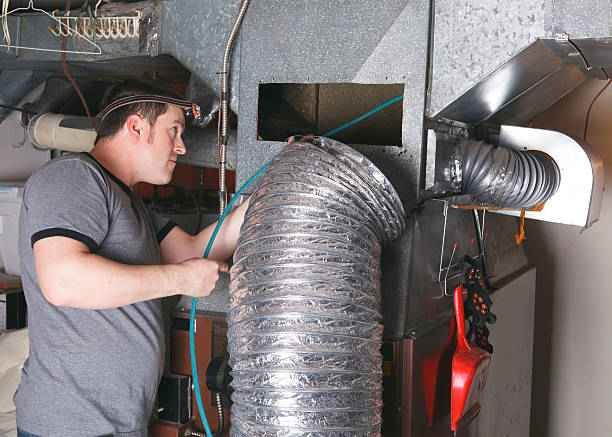
Most Northbrook homes went up between the late 1940s and the mid-1960s, when the laundry was tucked into the basement and the dryer hose ran wherever the joists allowed — across the ceiling joists, around a support post, out through the rim joist or a side wall. Sixty years and a few dryers later, those lines are longer, bendier and dirtier than any dryer maker would approve of.
Northbrook's bigger lots and mature trees add a problem other suburbs don't have: roof caps clog with leaves, pine needles and bird nests, so an upstairs laundry vents into the attic instead of the open air. And in some older homes the line terminates under the back deck or into a crawl space, blowing hot lint under your feet. We clean the whole run either way, and tell you exactly where it comes out.
Jump to: What we clean · Common Northbrook problems · Service area
See how much air your dryer vent is actually moving
Before we quote, we measure airflow at the outside cap with the dryer running and inspect the line where it's reachable. After cleaning we measure again, so you can see the change in real numbers instead of taking our word for it. If your vent is already moving air well, we'll say so and you can wait.
Brushing for long, twisty runs and roof caps
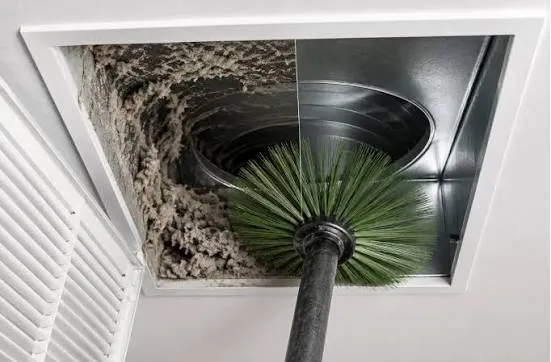
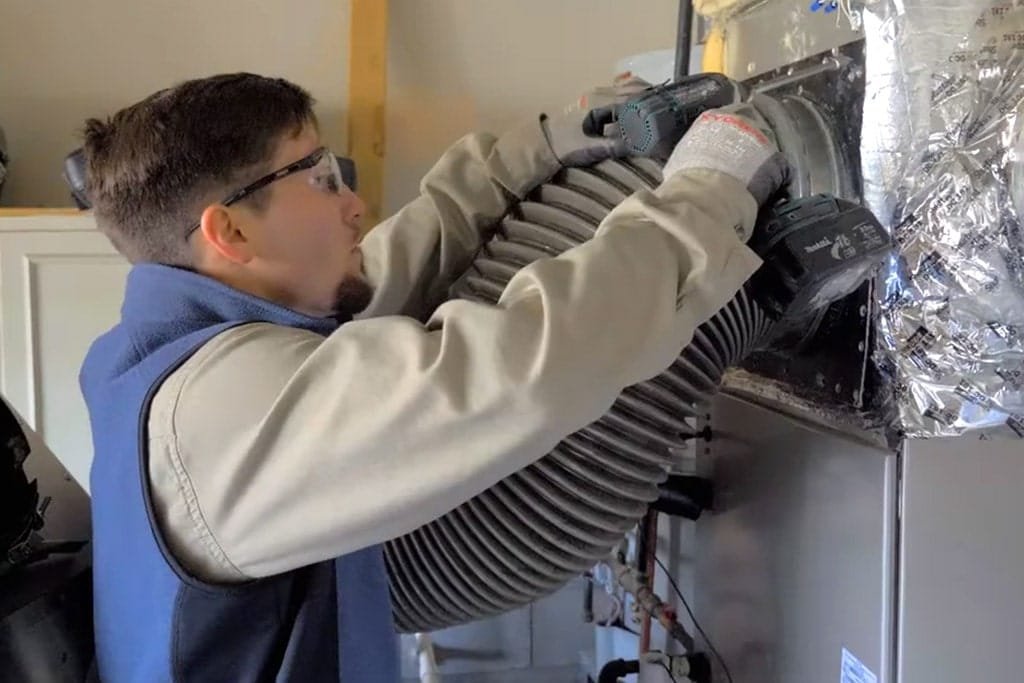
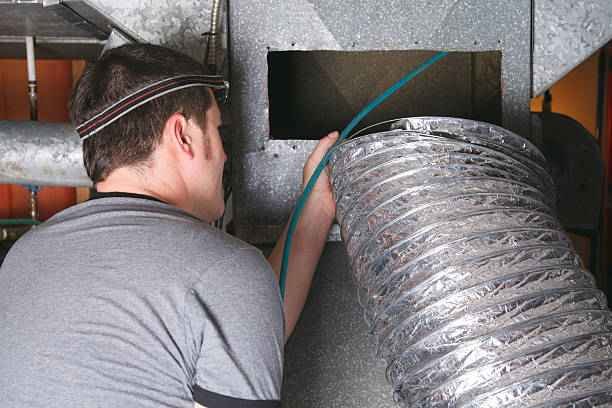
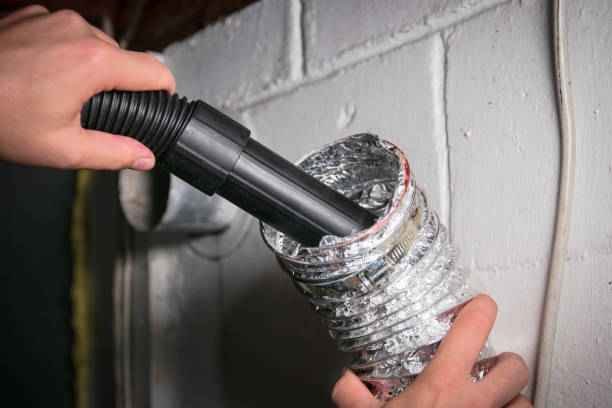
We run rotary brush heads and a high-volume vacuum through the full length of the line — from the back of the dryer, through every elbow, basement ceiling run, attic section and out the roof or wall cap. Crushed foil hose, plastic duct, a stuck flap or a joint that came apart at the wall: we show it to you and can repair it the same day.
One price, agreed before tools come out
You get a single number covering the full vent line, the transition hose behind the dryer and the outside cap — settled before we begin. No extra charges for elbows, roof access, attic distance or extra length once we're on the ladder.
 01 · Long dry times